YITONG SUN

Joule-Flocked Smart Textiles

Work in progress

MIT CSAIL HCI

Stefanie Mueller’s Engineering Group

2025–present

Joule-Flocked Smart Textiles explores a new fabrication approach for programmable smart textiles that combines multimaterial 3D printing, in situ Joule heating, and electrostatic flocking. The project was initiated in September 2025 at MIT CSAIL HCI in Stefanie Mueller’s Engineering Group and is led by Dr. Yitong Sun, covering materials experiments, 3D printing, physical modeling, circuit construction, PCB design, simulation, and functional testing.

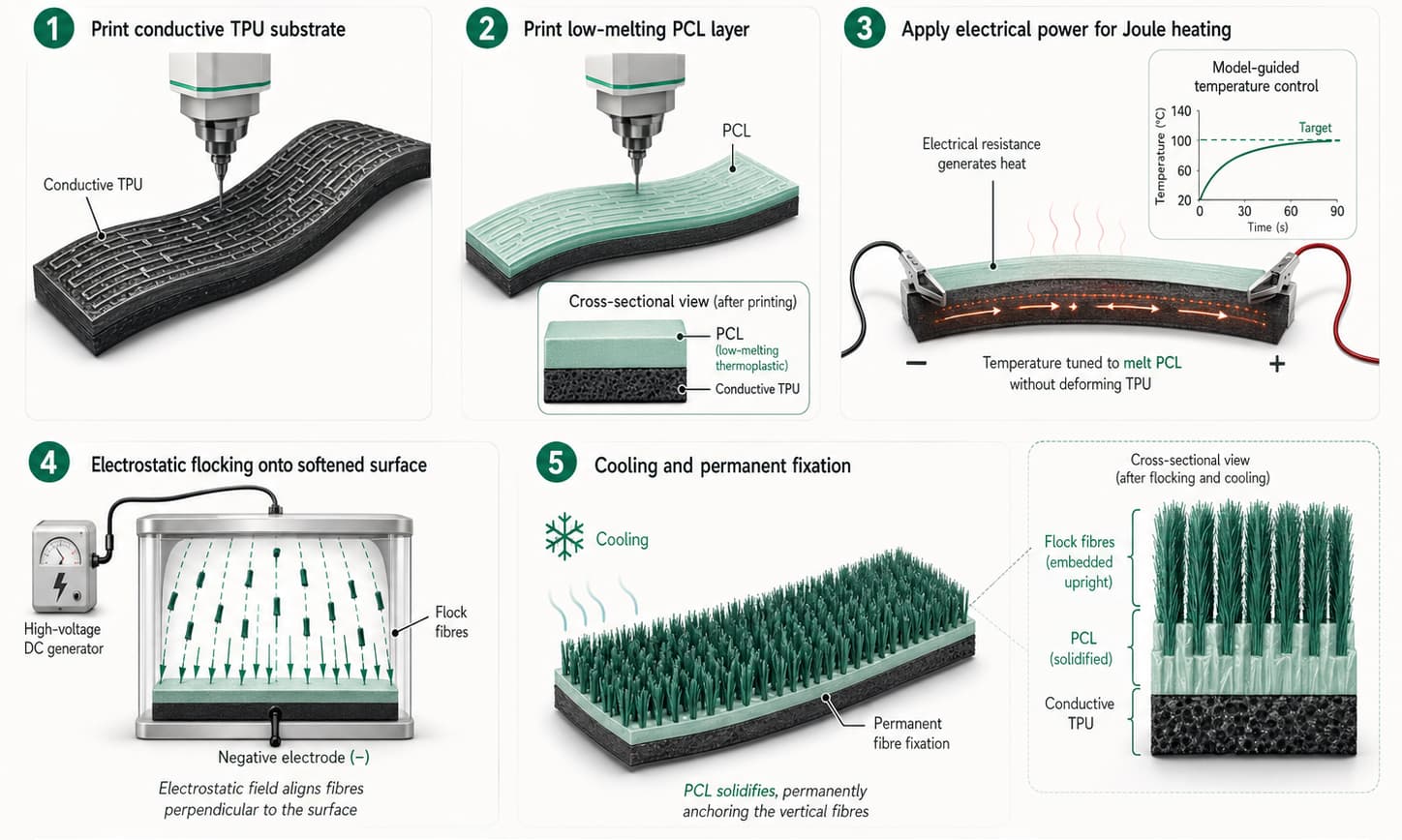
The core idea is to use a 3D-printed conductive TPU structure as both a flexible substrate and an integrated heating/electrode layer. A low-melting PCL adhesive layer is printed on top of the conductive TPU. By applying electrical power across the TPU, the substrate generates Joule heat through its own resistance, allowing the PCL layer to soften locally while the TPU remains structurally intact. The softened surface is then electrostatically flocked, enabling short fibres to be vertically embedded and permanently fixed after cooling.

This approach enables flocked smart textiles to be fabricated with high programmability directly from printed geometry. By changing the fibre material, colour, density, and the layout of conductive and insulating regions, the same process can support multiple functional surfaces, including tactile interfaces, pressure sensors, vibration sensors, and soft interactive skins. For example, replacing conventional flock fibres with carbon fibres creates a pressure-sensitive resistive network: when touched or pressed, fibre–fibre and fibre–electrode contacts increase, forming additional parallel conductive pathways and reducing the measured resistance.

Compared with traditional textile functionalization methods that often require manual assembly, stitching, coating, or multi-step post-processing, this method points toward a more integrated workflow in which structure, adhesion, heating, fibre placement, and sensing behaviour can be designed together. This makes it particularly promising for wearable devices, soft robotics, human–computer interaction, and adaptive textile interfaces where softness, flexibility, surface texture, and electrical functionality must coexist.

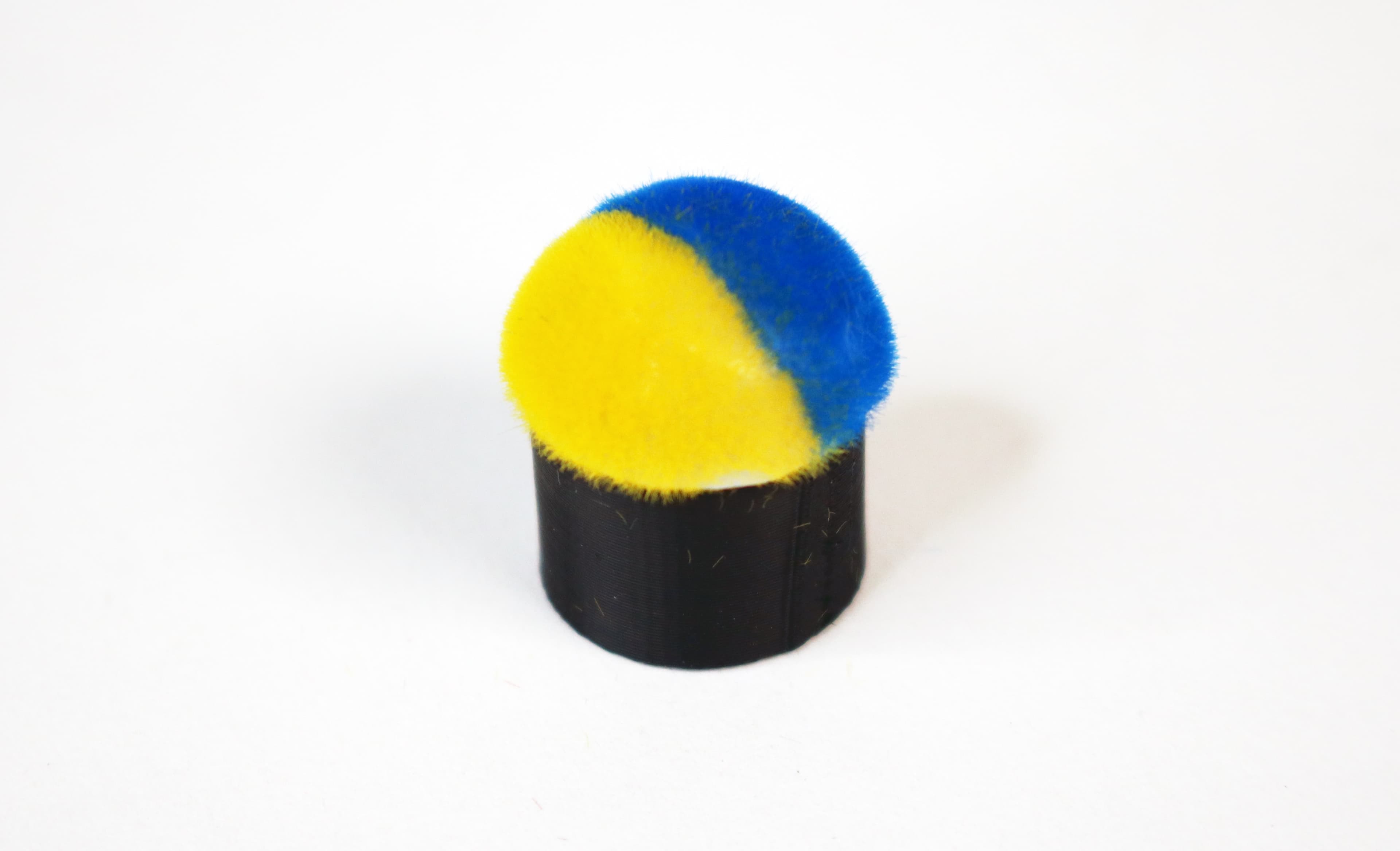
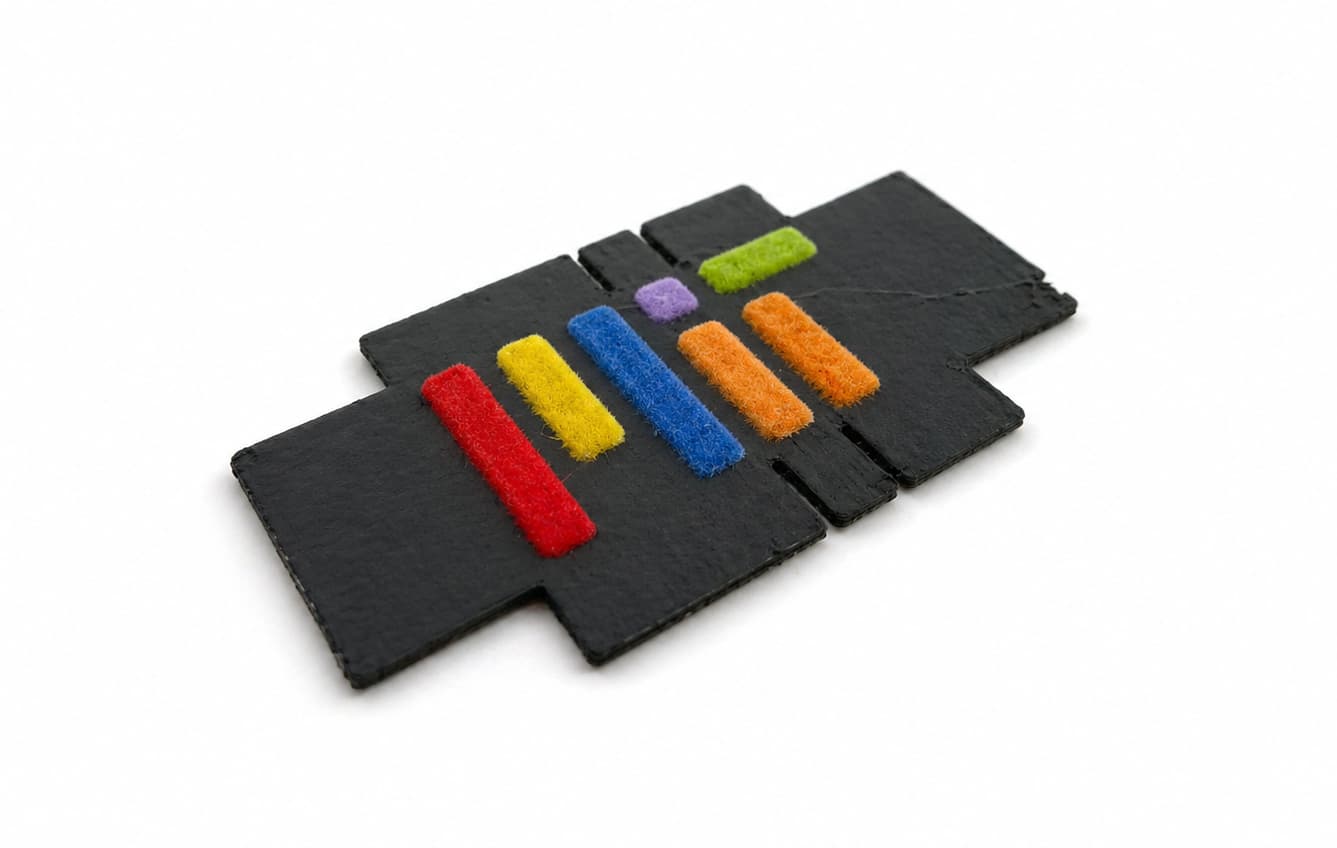
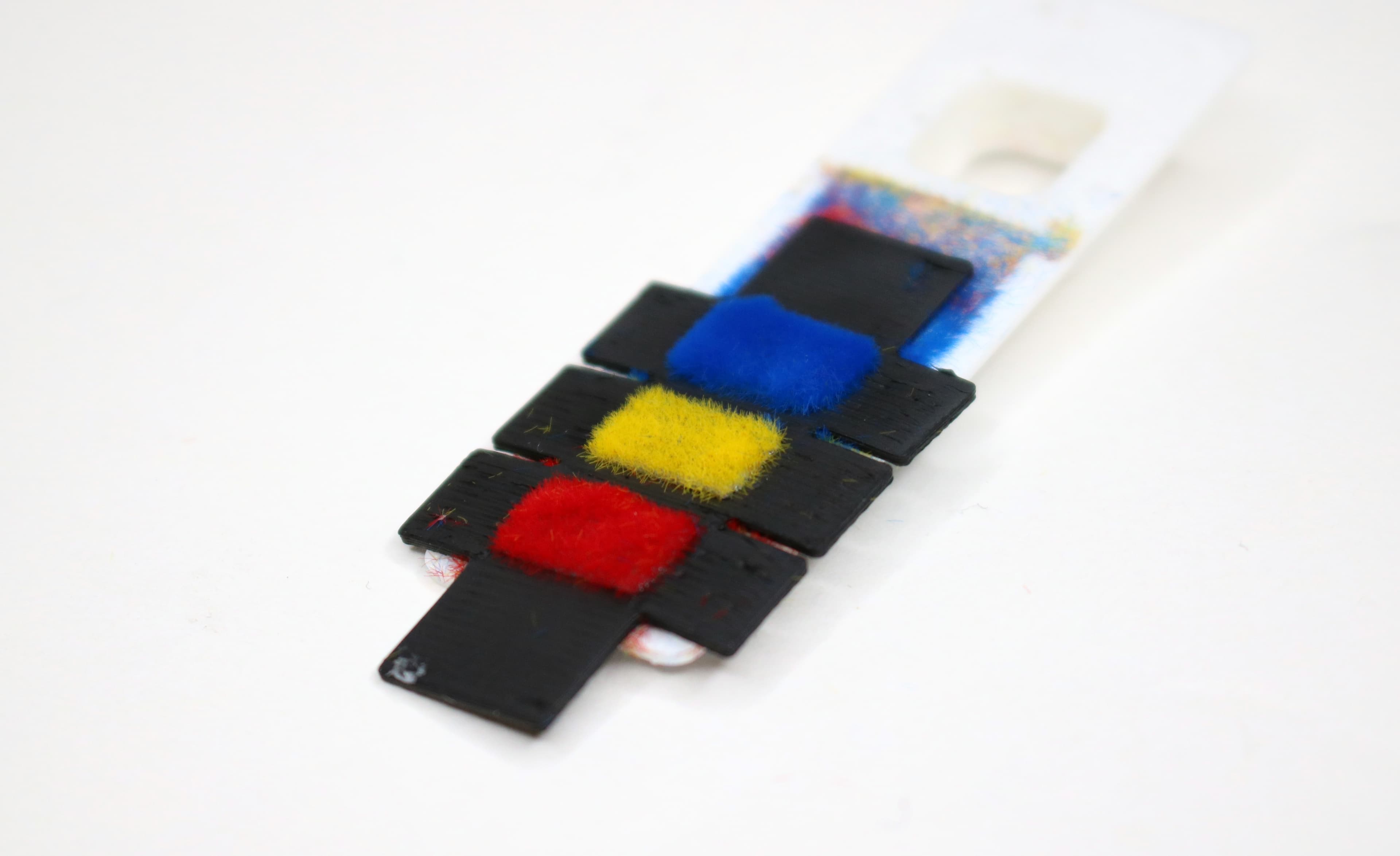
Current prototypes demonstrate multicolour flocking, multimaterial flocking, flocking on curved 3D-printed surfaces, and an initial carbon-fibre-based pressure sensor demo. The project is ongoing, with future work focusing on improving sensing performance, expanding material compatibility, and developing more complex smart textile interfaces.
Joule-flocked smart textile detail image.
Joule-heat-assisted electrostatic flocking of a multimaterial 3D-printed smart textile. A conductive TPU substrate is first fabricated by 3D printing to form a flexible and electrically addressable base. A low-melting-point PCL layer is then printed on top of the conductive TPU as a thermoplastic adhesive layer. When electrical power is applied across the two ends of the TPU substrate, Joule heating is generated by the intrinsic electrical resistance of the conductive TPU. By modelling the electrical and thermal characteristics of the printed TPU, the heating temperature can be precisely regulated to soften or melt the PCL layer while maintaining the structural integrity of the TPU substrate. The heated multilayer substrate is subsequently connected to the negative electrode of a high-voltage electrostatic flocking system. Under the electrostatic field, flock fibres are vertically aligned and driven into the softened PCL layer. Upon cooling, the PCL solidifies and permanently anchors the upright fibres, producing a programmable flocked smart textile enabled by multimaterial 3D printing, model-guided in situ Joule heating, and electrostatic fibre assembly.
Joule-flocked smart textile prototype detail.
Multicolour and multimaterial flocking tests on 3D-printed substrates.
Joule-flocked smart textile process detail.
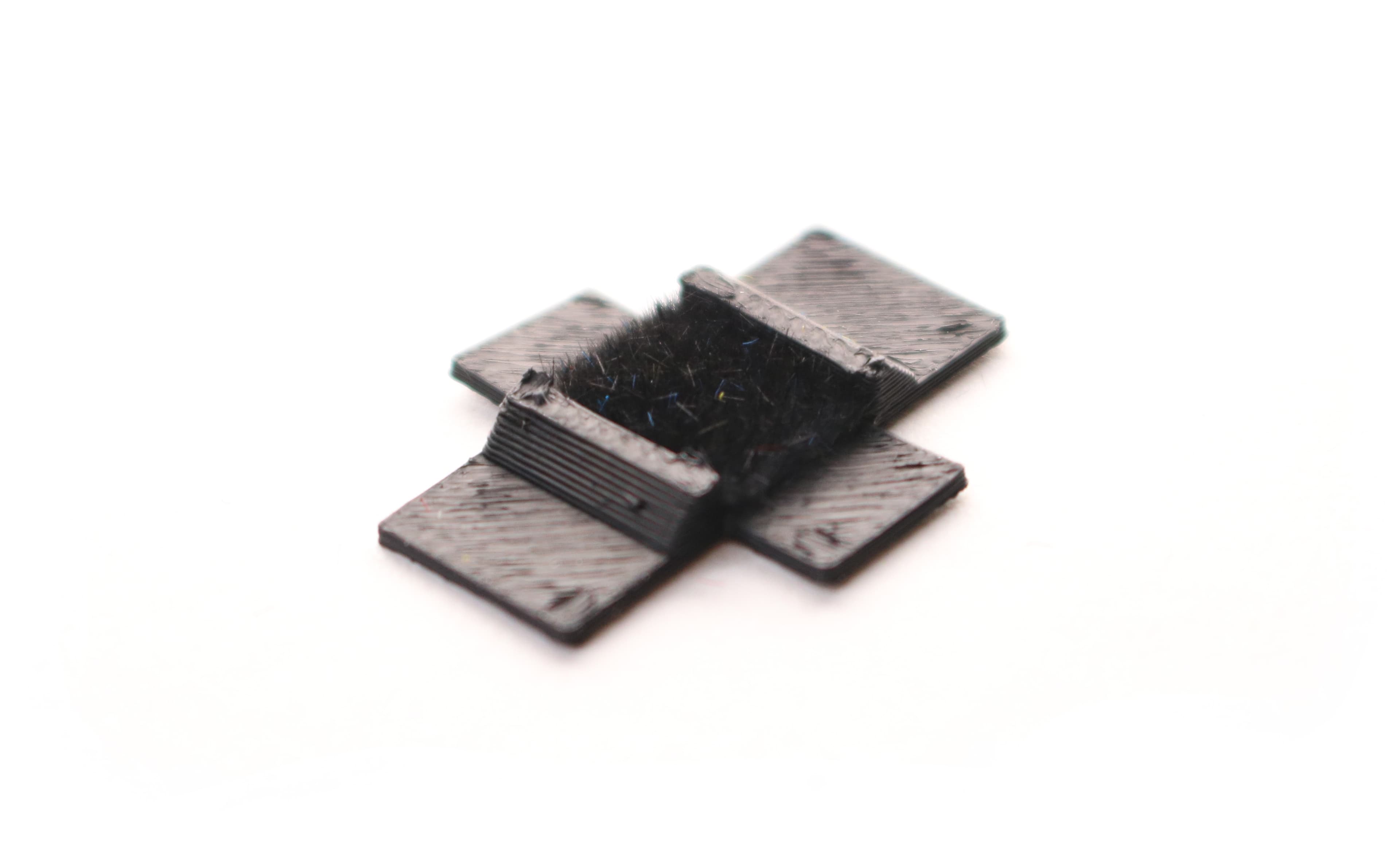
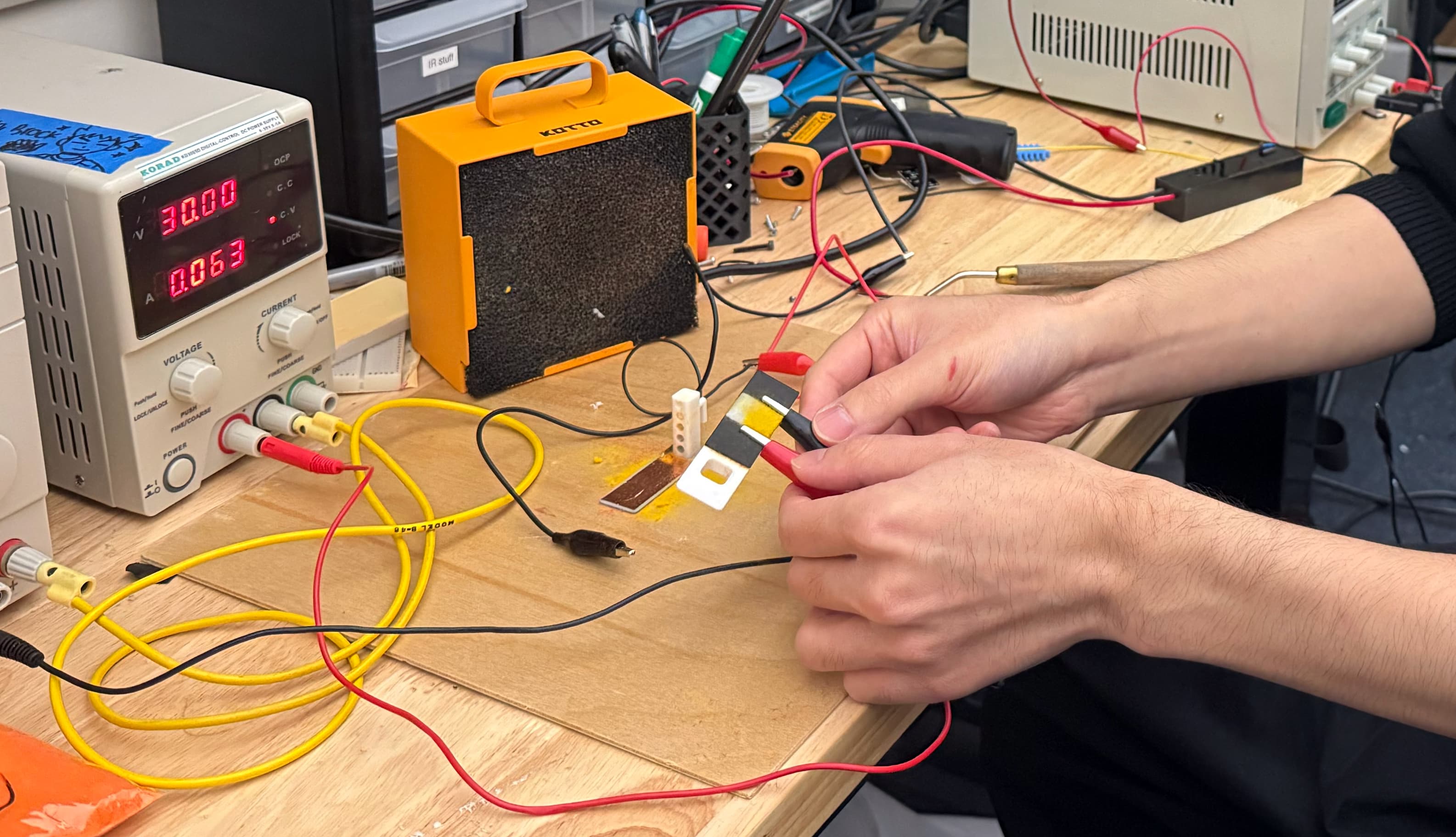
Electrical testing of a carbon-fibre-flocked pressure sensor.
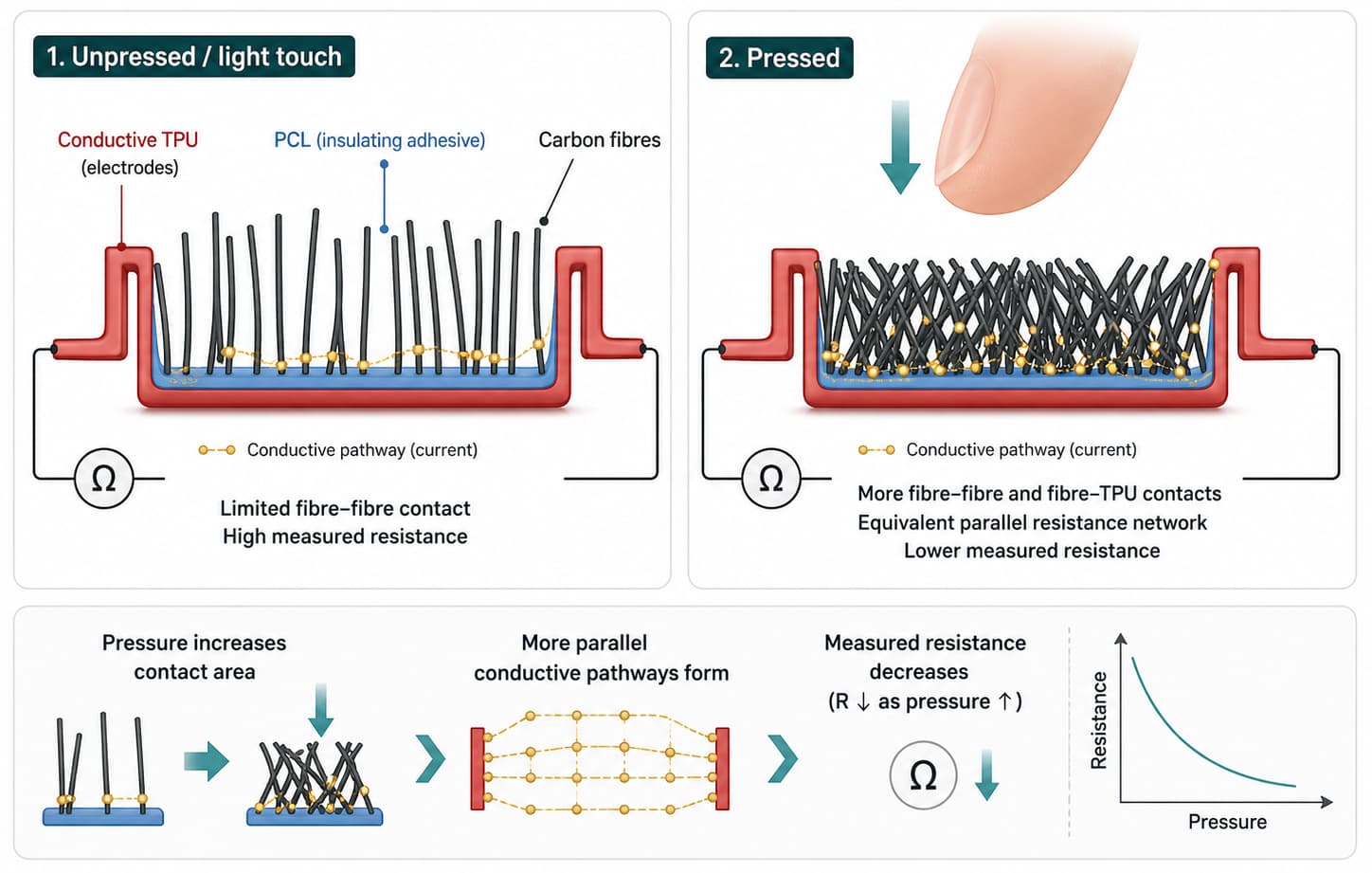
Carbon-fibre flocking pressure-sensing mechanism diagram.
Pressure-sensing mechanism of carbon-fibre flocking based on contact-induced resistance modulation. When the flocking fibres are replaced with conductive carbon fibres, the flocked structure functions as a pressure-sensitive resistive network. In the unpressed or lightly touched state, the carbon fibres remain mostly upright and spatially separated within the insulating PCL adhesive layer, resulting in limited fibre-fibre contacts and a relatively high resistance measured between the two conductive TPU electrodes. Upon external pressing, the carbon fibres bend, compress, and increasingly contact neighbouring fibres as well as the conductive TPU side regions. These additional fibre-fibre and fibre-TPU contacts create multiple parallel conductive pathways across the device. As the applied pressure increases, the effective contact area and the number of conductive junctions increase, thereby reducing the equivalent resistance of the network. The device therefore converts mechanical pressure or touch into a measurable resistance decrease, enabling carbon-fibre-flocked smart textiles for tactile or pressure sensing.
Resistance testing of the conductive sensor.
Joule-flocked smart textile material detail.
Early bench-top experiments for manual flocking and electrically induced PCL melting.
Observing the temperature rise and heat conduction through a thermal imaging camera.
Joule-flocked smart textile surface detail.
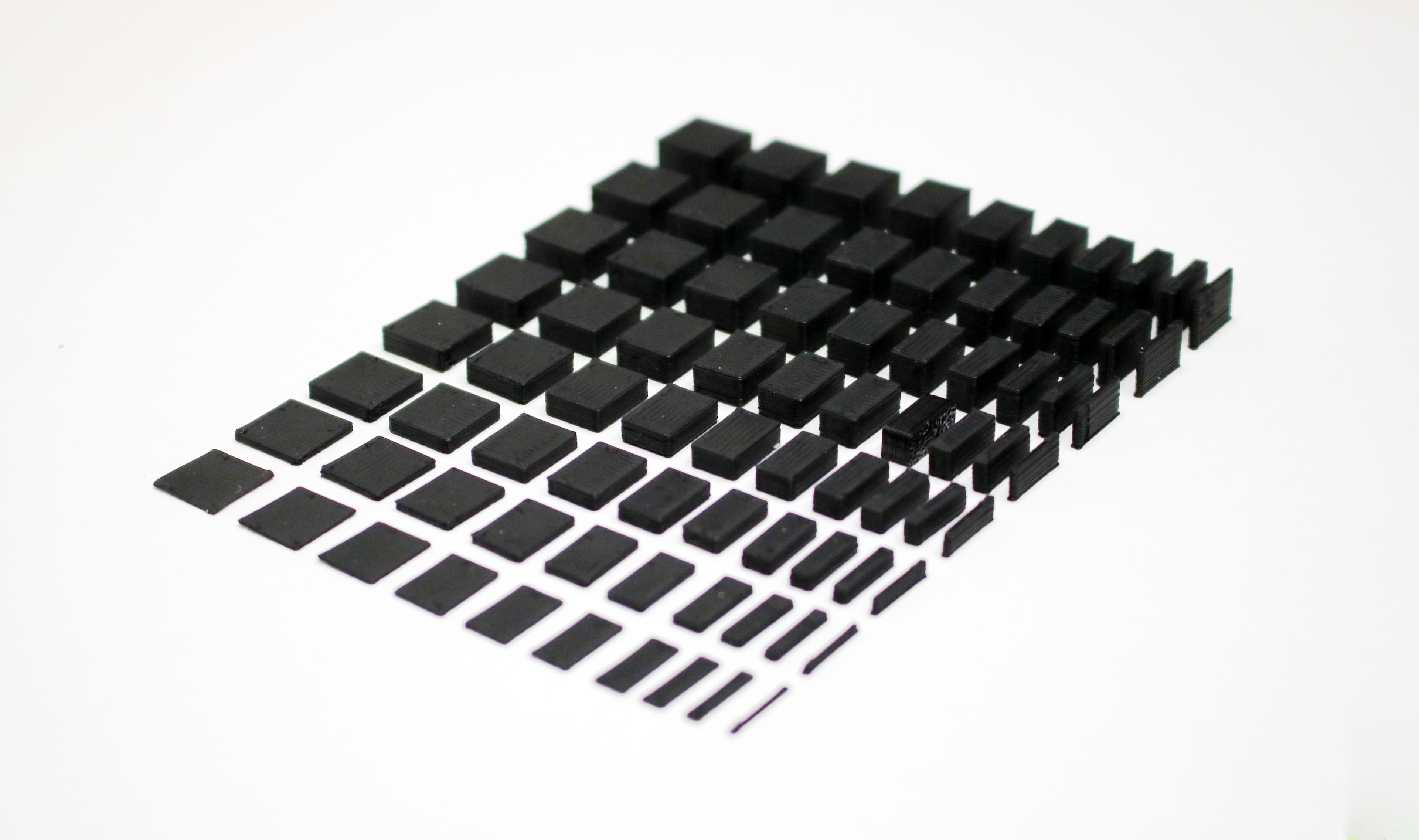
Eighty conductive TPU test coupons for modelling resistivity and print-dependent physical properties.
Joule-flocked smart textile installation detail.
Multicolour flocking on a curved 3D-printed surface.
Multimaterial multicolour high-detail flocking test on a conductive substrate.
Multimaterial, multicolour, high-detail flocking test on a 3D-printed conductive substrate.